
Can therapy help with trauma from the past?

Trauma can cast a long shadow
It doesn't always stay in the past, in the way we might want it to. Something that happened years ago, may still affect how we feel today.
You might notice it in your relationships, your body, your emotions, your general sense of safety, or the way you respond to stress, conflict or closeness.
Sometimes trauma is linked to a clear event. Sometimes it is connected to repeated experiences, difficult relationships, neglect, loss, fear, instability, or not feeling safe enough for a long time.
You may not even use the word trauma for what happened. You might simply know that something is still negatively affecting you.
Therapy offers a safe, confidential space to gently explore how past experiences may still be shaping the present. It is not about forcing you to relive anything or talk before you are ready. It is about finding a pace that feels comfortable, and starting where you are.

What to look out for
Trauma does not look the same for everyone.
Some people experience vivid memories, flashbacks or nightmares. Others feel numb, detached, anxious, reactive or constantly on edge. Some people appear to function well on the outside, while feeling overwhelmed or disconnected underneath.
You might notice:
- feeling anxious, tense or easily startled
- avoiding certain places, people, conversations or memories
- feeling numb, detached or emotionally shut down
- finding it hard to trust people
- feeling responsible, ashamed or self-critical
- struggling with boundaries
- reacting strongly to conflict, rejection or criticism
- feeling overwhelmed by emotions
- finding it difficult to feel safe in your body
- feeling disconnected from yourself or others
- repeating relationship patterns you do not fully understand
- feeling as though you have had to keep going without really processing what happened

Carrying something difficult from the past?
We are here to help you. Explore our trauma support page to find a therapist, or get in touch if you would like help deciding on the next step.
What counts as trauma?
Trauma is not only about what happened. It is also about how an experience affected you, what support you had at the time, and whether your mind and body were able to process what happened safely.
Some traumatic experiences are obvious. Others may be harder to name.
Trauma can be linked to experiences such as:
- abuse, neglect or violence
- accidents, illness or medical experiences
- loss, grief or sudden change
- bullying, humiliation or rejection
- growing up around fear, conflict or instability
- feeling unsafe in relationships
- being repeatedly criticised, controlled or dismissed
- experiences where you felt trapped, powerless or alone
- witnessing something frightening or distressing
- long periods of stress without enough support
You do not need to compare your experience with anyone else’s. You also do not need to decide whether it was “bad enough” before seeking support.
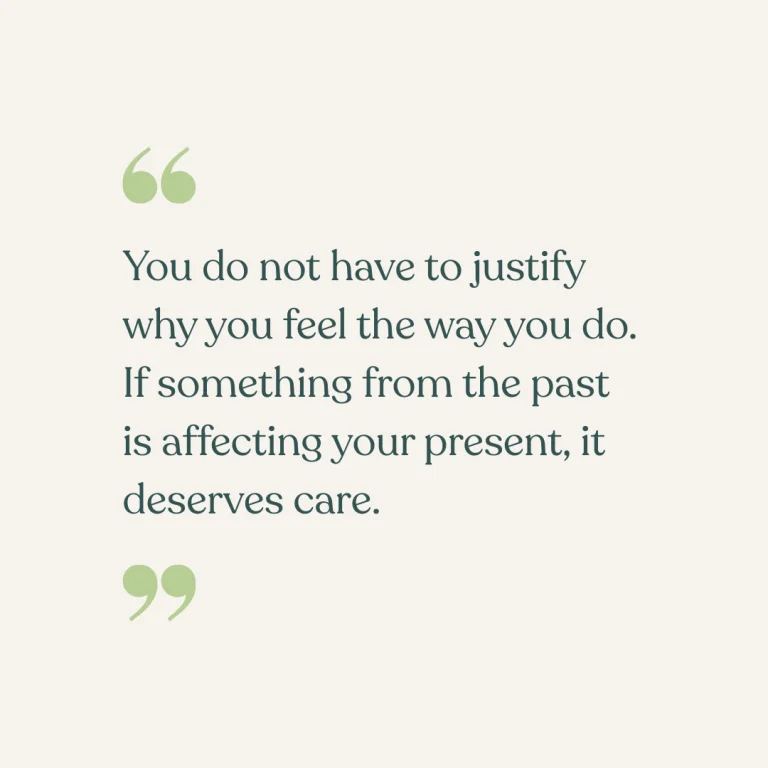
If something continues to affect how you feel, cope or relate now, it matters.
Can past trauma affect me even if I do not think about it often?
Yes. Past trauma does not always show up as clear memories.
Sometimes it appears in the body, in behavioural patterns, or in emotional responses that feel bigger than the present situation. You might not think about what happened every day, but still notice that certain situations affect you strongly.
For example, you might:
- freeze when someone is angry
- feel panicked when plans change
- shut down when conversations become emotional
- feel unsafe when someone gets too close
- expect rejection even when things seem okay
- feel responsible for keeping others calm
- avoid asking for what you need
- feel anxious without knowing why
- struggle to rest or feel settled
- feel detached from your emotions
These responses may have developed as ways to survive, cope or protect yourself. Therapy will help you understand them with more compassion.

Do I have to talk about everything straight away?
No. Safety, trust and gentle pacing are important parts of trauma therapy. Your therapist will tune into you and won’t take you anywhere you don’t want to go. They’ll spend time helping you to feel grounded, understand your responses, and will focus on building a strong therapeutic relationship where difficult things can be approached with confidence.
You are allowed to say when something feels too much. You are allowed to pause. You are allowed to work slowly.
Some people worry that therapy will open things up too quickly. A thoughtful therapist will not rush you into details before you are ready. We’ll start where you are and follow your lead.

What if I cannot remember everything?
It is common for memories of difficult experiences to feel unclear, fragmented or confusing.
You might remember some parts vividly and other parts not at all. That’s absolutely fine. You do not need a perfect timeline for therapy to be useful.
Therapy will support you with the impact of what you’re experiencing now, even if the story of the past feels incomplete. The most important thing is being helped to understand how you feel, what is being triggered, and what support it is you need.

How can therapy help with trauma from the past?
Therapy will help you understand how trauma is affecting your life today
We can't erase what happened, but we can support you to safely process these experiences so you can start to heal. The memories may not go away, in time though you'll carry them differently, with more awareness, self-compassion and understanding.
Depending on your needs and your therapist’s approach, therapy may help you:
Make sense of how past experiences shaped you
Understand emotional, physical or relational triggers
Feel less alone with what you are carrying
Develop healthier ways to manage overwhelm
Recognise patterns of fear, shame, self-blame or avoidance
Explore relationships and boundaries
Build self-compassion
Feel more connected to your emotions and body
Finding the right support matters
Trauma work needs to be gentle, thoughtful and well-paced. The right therapist will hold you steady while you explore what is happening beneath the surface and find your way forward.
What is EMDR and could it help?
EMDR stands for Eye Movement Desensitisation and Reprocessing. It is a structured therapy approach that may support people to process traumatic memories or distressing experiences.
EMDR is sometimes used for trauma, but it is not automatically the right starting point for everyone. It should be considered carefully with a trained therapist, following an assessment of what you are experiencing, what you feel ready for, and what support is appropriate.
Some people may benefit from relational, exploratory or stabilising therapy before any trauma processing begins. Others may find EMDR helpful as part of their therapy journey.
If you are interested in EMDR, contact Sharon to discuss whether this is the right approach for you.

Can trauma affect relationships?
Yes. Trauma can affect how safe you feel with other people.
You may find it hard to trust, ask for help, express needs, set boundaries or believe that relationships are secure. You might become anxious when someone seems distant, shut down during conflict, or feel responsible for other people’s emotions.
Sometimes trauma can make closeness feel both essential and terrifying all at once.
You may notice yourself repeating patterns, withdrawing from others, people-pleasing, becoming hyper-alert to changes in your partner, or expecting that you will be hurt, rejected or misunderstood.
Therapy will help you understand these patterns without shame or criticism. It offers a space to explore what past relationships have taught you, how pain from the past is limiting your relationships now, and the positive change that is possible when you feel safer and more supported.

I feel numb. Could this be trauma?
Yes. Feeling numb, detached or shut down can be a trauma response.
If something felt too much to process at the time, your mind and body may have shut down to protect you, causing emotional numbness.
You might feel as though you are watching life from a distance. You might struggle to know what you feel, feel disconnected from your body, or find it hard to access emotions that other people seem able to feel easily.
Therapy will help you gently understand this numbness and start to gradually encounter what lies behind it.

What if I feel ashamed?
Shame and self-blame are common after trauma.
You may think you should have acted differently, spoken up, left sooner, coped better, or not been affected in the way you were. You may also worry that others will judge you if they know what happened or how you feel.
Therapy offers a safe, non-judgemental space to bring these thoughts into the open instead of carrying their weight alone.
Your therapist will help you to reality test the self-criticisms you’ve been left with, consider the truth of the situation and the actual resources and options available to you at the time to encourage greater understanding and compassion towards yourself.

Taking the first step
If past trauma is still affecting you, we are here to lighten your load.
Therapy will give you the space you need to slow things down, come to understand what’s been happening, and begin to heal the wounds from the past.
Whether you know what has affected you or are still trying to figure it all out, we’ll help you to get to the root of the issues.