
I can’t stop overthinking — can therapy help?

Overthinking can be exhausting.
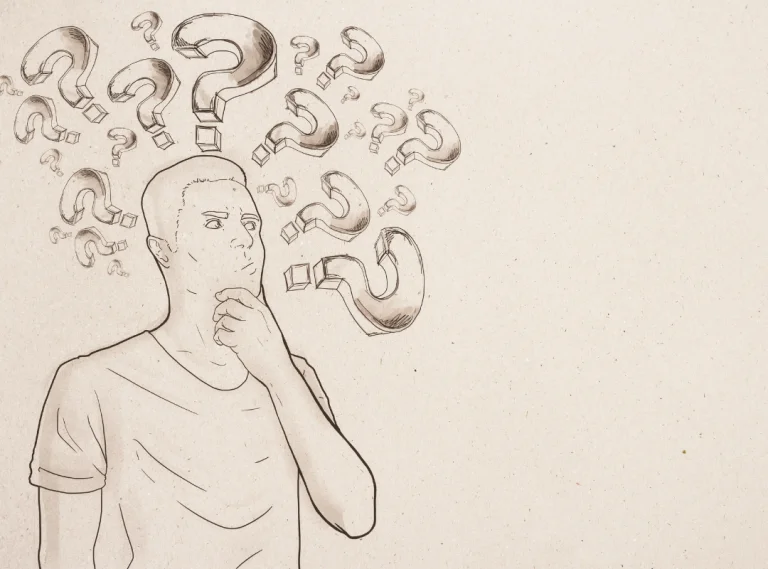
Perhaps you replay conversations long after they have happened. Maybe you worry about what someone meant, whether you said the wrong thing, what could happen next, or how to prepare for every possible outcome.
Sometimes overthinking feels like problem-solving. You may tell yourself that if you think about something for long enough, you will find the answer, avoid a mistake, or feel more in control.
But instead of bringing relief, overthinking can leave you feeling more anxious, stuck and drained.
If you cannot stop overthinking, it does not mean you are weak, dramatic or making things harder than they need to be. It may be a sign that your mind is trying to keep you safe, make sense of uncertainty, or manage feelings that have become difficult to hold alone.

Overthinking can show up in lots of different ways.
It may feel loud and obvious, like racing thoughts that will not slow down.
Or it may feel more subtle, like a constant background analysis of what has happened, what might happen, and what you should have done differently.
Overthinking can affect your sleep, mood, relationships, confidence and ability to feel present.
Even when nothing is visibly wrong, your mind may feel busy, alert or difficult to quieten.
Therapy can help you begin to understand what sits underneath the overthinking, and how to respond to it calmly and with more compassion.
You might notice yourself:
Replaying conversations again and again
Worrying you have upset someone
Imagining worst-case scenarios
Needing reassurance before you can feel settled
Struggling to make decisions
Going over past mistakes
Reading into small details, messages or tone of voice
Finding it hard to relax
Feeling mentally tired but unable to switch off
Planning for every possible outcome
Criticising yourself for how you handled something
Feeling stuck between options because you don't know what's "right"
Feeling overwhelmed by your own thoughts?
We are here to help. You do not need to know exactly why you are overthinking before reaching out for support. You can explore our anxiety support page, or get in touch if you would like help taking the next step.
Why do I overthink everything?
There is not always one simple reason for overthinking.
Sometimes it is linked to anxiety, stress, burnout, perfectionism, low self-esteem, people-pleasing, relationship patterns or past experiences. Sometimes it develops because you have learned that being prepared, alert or self-critical helps you avoid conflict, rejection, disappointment or failure.
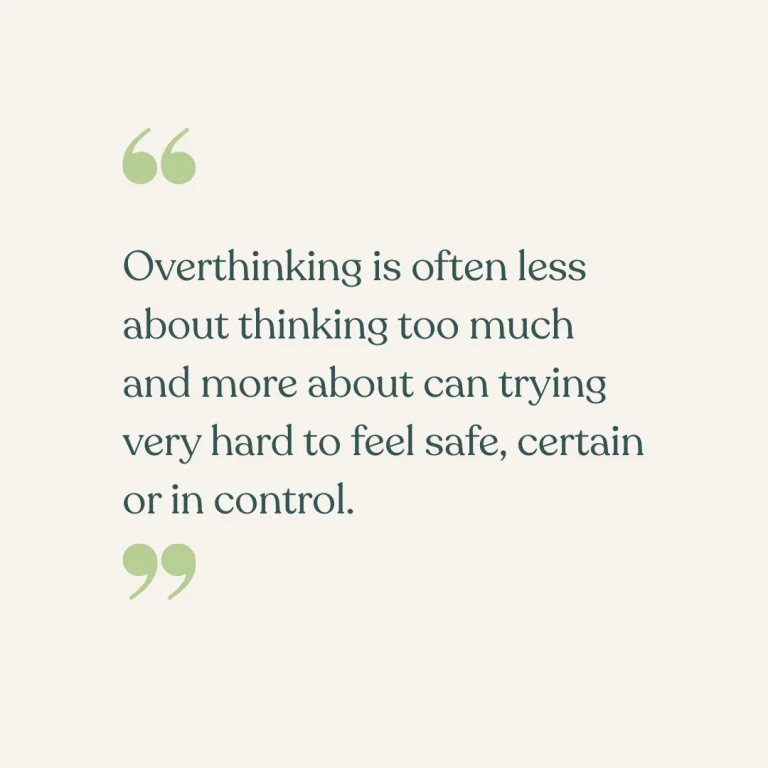
Overthinking can also become a way of trying to feel safe.
You might think that if you can work out every possible outcome, you will be less likely to be hurt, criticised, misunderstood or caught off guard. But the mind can start treating uncertainty as a problem that must be solved, even when there is no clear answer.
This can create a cycle:
- you feel uncertain or unsettled
- your mind starts searching for certainty
- you analyse, replay or plan
- you feel briefly reassured
- the uncertainty returns
- the overthinking starts again
Therapy can help you understand your own version of this cycle, including what tends to trigger it and what it may be trying to protect you from.
Is overthinking the same as anxiety?
Overthinking and anxiety are closely linked, but they are not exactly the same thing.
Anxiety can involve physical sensations, emotions and thoughts. You might feel tense, restless, panicky, irritable or on edge. Overthinking is often one way anxiety shows up in the mind.
For some people, anxiety feels very physical. For others, it feels mostly like constant thinking, analysing, checking or worrying.
You might not describe yourself as anxious at first. You might simply feel unable to switch off, relax or stop going over things in your head.
Therapy can help you explore whether overthinking is connected to anxiety, or whether it is also linked to other patterns such as self-criticism, relationship worries, boundaries, trauma, burnout or the need to feel in control.

Why do I always replay conversations?
Replaying conversations is a common form of overthinking.
You might go back over what you said, how someone reacted, whether you sounded strange, whether you shared too much, or whether you missed something important. You might imagine what you should have said instead, or worry that the other person is now thinking badly of you.
This can be especially common if you are sensitive to other people’s moods, afraid of conflict, used to monitoring how others respond, or worried about being misunderstood.
Sometimes replaying conversations is linked to social anxiety. Sometimes it is connected to people-pleasing, low self-worth, relationship anxiety or past experiences where it felt important to stay alert to other people’s reactions.
Therapy can help you understand why your mind returns to these moments, and what kind of reassurance or safety it may be searching for.

Why can’t I make decisions?
Overthinking can make decision-making feel difficult.
You may find yourself weighing up every possibility, trying to predict how you will feel later, worrying about disappointing someone, or needing to feel certain before you can act.
Even small decisions can start to feel heavy if your mind treats them as though there is a perfect answer you must find.
This can become especially hard if you have learned to doubt yourself, prioritise other people’s needs, or avoid making choices that could lead to criticism or conflict.
Therapy can help you explore why decisions feel so laden, and begin building more trust in yourself.
You might worry:
“What if I get it wrong?”
“What if I regret it?”
“What if I upset someone?”
“What if this says something bad about me?”
“What if I should have known better?”
"What if I'm judged or ridiculed for this?"
"What if other people don't understand?"
Can overthinking affect my relationships?
Yes. Overthinking often shows up in relationships.
You may overthink messages, tone, distance, conflict, silence or changes in someone’s behaviour. You may wonder whether someone is upset with you, whether you have done something wrong, whether they still care, or whether the relationship is secure.
This can be painful because the thoughts may feel urgent and convincing, even when part of you knows you are spiralling, and if you find yourself needing to seek reassurance it can frustrate and offend the other person.
Relationship overthinking can sometimes be linked to attachment patterns, fear of rejection, past hurts, inconsistent relationships, people-pleasing or difficulty feeling secure with others.
Therapy helps you slow these patterns down to understand what is being activated in relationships, without blaming you for feeling anxious or needing reassurance.

Finding the right support matters
Overthinking can have different roots. The right therapist can help you explore what is happening beneath the surface and help you to free yourself from these tormenting patterns.
Can overthinking be linked to people-pleasing?
Yes. Overthinking and people-pleasing can be closely connected.
If you are used to putting other people’s feelings first, you may spend a lot of time thinking about how your words, choices or boundaries might affect them.
You might replay whether you sounded too blunt. You might worry that saying no was selfish. You might feel responsible for keeping everyone happy, even when it leaves you exhausted.
Overthinking can become a way of scanning for possible conflict or disapproval.
Therapy can help you explore where these patterns come from, what they’ve helped you manage in the past, and how to begin relating to yourself and others with more compassion and calm.

Can therapy help me stop overthinking?
Yes. Therapy may not instantly switch off overthinking, but it will help you understand it and start to respond to it differently.
Rather than only trying to stop the thoughts, therapy can help you explore why your mind is working so hard in the first place.
In addressing the roots you’ll find new ways to self-soothe.
Over time, therapy can help overthinking feel less knee jerk and reduce its power over you. It will give you more space between the thought and your emotional response.
Depending on your needs and your therapist’s approach, therapy may help you:
Notice the triggers to overthinking
Understand the feelings behind it
Recognise patterns in relationships, boundaries or self-worth
Explore how past experiences may shape your need for control or certainty
Develop ways to pause and ground yourself when thoughts spiral
Build more trust in yourself, your own feelings and your decisions
Respond to yourself with less criticism and more compassion
Practice tolerating uncertainty
Identify when overthinking is linked to anxiety, burnout or trauma
What can I do when I am overthinking?
When overthinking feels intense, it can help to gently interrupt the cycle.
You might try:
- writing down the thought and asking, “What am I afraid will happen?”
- noticing whether you are trying to solve something that has no clear answer
- asking, “Is this helping me, or is it keeping me stuck?”
- bringing your attention back to your body or your surroundings
- taking a short break from checking messages or seeking reassurance
- naming the feeling underneath the thought, such as fear, shame, guilt or uncertainty
- doing something grounding, such as walking, breathing slowly or making a warm drink
These strategies are not about dismissing your feelings. They are about creating a little more space around the thoughts, so they do not have to take over completely.
If overthinking feels constant or difficult to manage alone, therapy can help you understand what is happening in more depth to address the problem at its roots.

Taking the first step
If you cannot stop overthinking, we are here for you.
You don’t need to know exactly why your mind feels so busy before beginning therapy. It may be enough to know that the overthinking is affecting your sleep, relationships, confidence, mood or ability to feel present.
Therapy offers you a space to slow things down, understand what is happening behind the racing thoughts, and begin finding a positive way forward.
If you are ready to take the next step, you can explore support for anxiety, meet one our therapists, or get in touch to ask a question first.
Whether you know what is driving the overthinking or are still trying to make sense of it all, we can help you take the next step.