
Why do I feel anxious in relationships?

Relationship anxiety is exhausting.
Perhaps you feel unsettled when someone takes longer to reply, seems distant, needs space, or says something that leaves you questioning where you stand. Or do you find yourself replaying conversations, looking for reassurance, worrying you have done something wrong, or frightened that someone will leave?
Even when you can reason that the relationship is okay, you may still find your body reacting as if everything is about to fall apart.
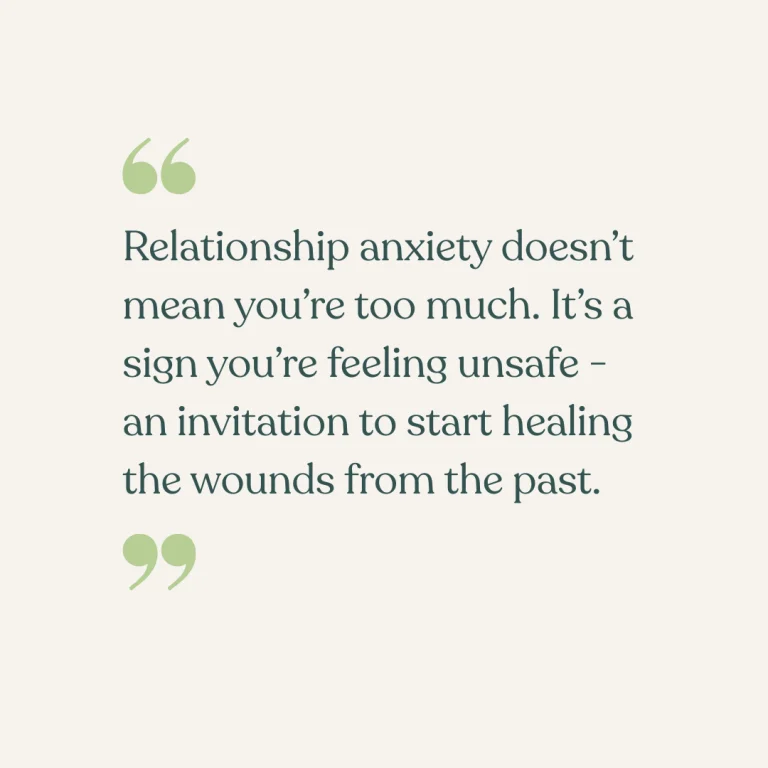
Feeling anxious in relationships can be embarrassing. We'll often criticise ourselves for being too “needy” or “too much”. This shaming is really unfair, especially since it’s far more likely that a painful wound from the past is being pressed on by closeness, uncertainty or an important somebody’s emotional distance.

What to look out for
Relationship anxiety can show up even in good relationships where there is love, respect and loyalty.
You might notice that you:
- worry excessively someone is upset with you
- feel anxious when plans change
- need reassurance to feel settled
- fear abandonment or rejection
- overthink messages or tone
- feel responsible for keeping the relationship okay
- struggle to express your needs
- feel panicked by distance
- become hyper-alert to changes in mood
- pull away before someone can hurt you
- feel unsure whether you can trust your feelings

Feeling anxious in relationships?
We are here to help. Explore our attachment and relationship patterns page to find a therapist, or get in touch if you would like help deciding on the next step.
Where does this come from?
Relationship anxiety is often linked to childhood experiences, attachment patterns, previous betrayals, trauma, low self-worth or relationships where love felt inconsistent, conditional or unsafe.
You may have learned to monitor other people closely, anticipate rejection, work hard to be easy to love, or expect that closeness will eventually lead to pain.
These responses although there to protect you, may have nothing to do with the reality of the people who are close to your now.
Therapy can help you understand what is being activated in your relationships, learn to better communicate what’s happening and what it is you need and find ways to take care of yourself with more compassion.
Why do I overthink messages?
Messages can feel loaded when relationships make you anxious.
You might read into punctuation, response times, short replies or changes in tone. A delayed message might feel like a serious rejection. A quiet day might feel like abandonment. A small disagreement might feel like the relationship is over.
This hypervigilance and emotional intensity is often completely exhausting, with so much energy being spent on both trying to understand what might be happening and find ways to reassure yourself.
Therapy supports you to understand why you are on such high alert in your relationships – uncovering and healing the roots of this insecurity to help you find healthier ways to steady yourself.
Can it affect how I behave?
Yes. Relationship anxiety can affect how you respond to closeness, distance and conflict.
You might seek reassurance, withdraw, over-apologise, people-please, become hyper-alert to the other person’s mood, or struggle to express what it is you need.
These responses are often attempts to feel safe and prevent rejection.
Therapy will help you understand these patterns. Through greater self-awareness and compassion, you’ll learn to better communicate your needs and find new ways to relate to others and to self-soothe.

Finding the right support matters
Relationship anxiety can feel hard to manage on your own. The right therapist will help you understand what’s happening and find new ways to cope.
How therapy helps
Therapy creates a safe, dedicated space in which you can uncover the roots of relationship anxiety, better understand your emotional reactions and develop healthier coping strategies.
Through improved self-awareness, you'll be supported to move from knee-jerk reacting to a compassionate holding of what is happening inside you.
This creates the internal space for you to recognise what's happening, identify what you need to self-soothe and ultimately make different choices.
Depending on your needs and your therapist’s approach, therapy can help you:
Understand attachment patterns
Notice triggers in relationships
Explore fear of rejection or abandonment
Build self-worth
Practice expressing your needs and boundaries
Reduce self-blame
Understand how past relationships shape current ones
Develop self-care strategies
Taking the first step
If your relationships are making you feel anxious, we are here to help.
Through therapy you’ll come to understand your fears, disentangle yourself from old patterns, and learn how to build more trust in yourself and the people around you.
Whether you already have an understanding of your relationship anxiety or feel completely lost and confused, our therapists are here for you.
You don't have to navigate it on your own.